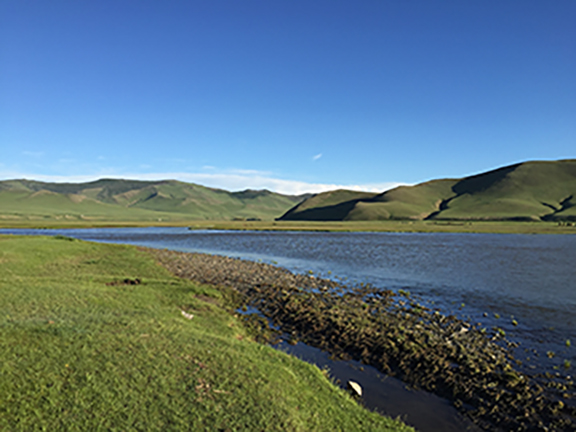
10-20 in. of rain annually
Mongolian Steppe
Base of Turks, Uighurs and Mongols
Born Temujin
Lake Baikal region
Son of minor chief
Warfare
Surrendered tribes spared
Alliances
Marriage politics
Multiple wives in steppe society vs. wife-concubines in China
Khuriltai (assembly), 1206
Capital at Karakorum

Why are we standing next to evidence of state-forced Chinese migrants at Karakorum?
Khan of Khans |
Southward |
Westward |
| Chinggis Khan, r. 1206-1227 | Xi Xia (Tangut), 1210 Jin (Jurchen) Beijing, 1211-5 Xi Xia (Tangut), Chinggis Khan killed, 1227 |
Khwarazm Shah: Bukhara & Samarqand, 1219-1221 |
| Ögödei, r. 1229-41 | Jin (Jurchen), Kaifeng, 1234 | Russia & Ukraine, 1237-40 |
| Güyük, r. 1246-48 | ||
| Mongke, r. 1251-1259 | Iran & Iraq, 1258-60 |
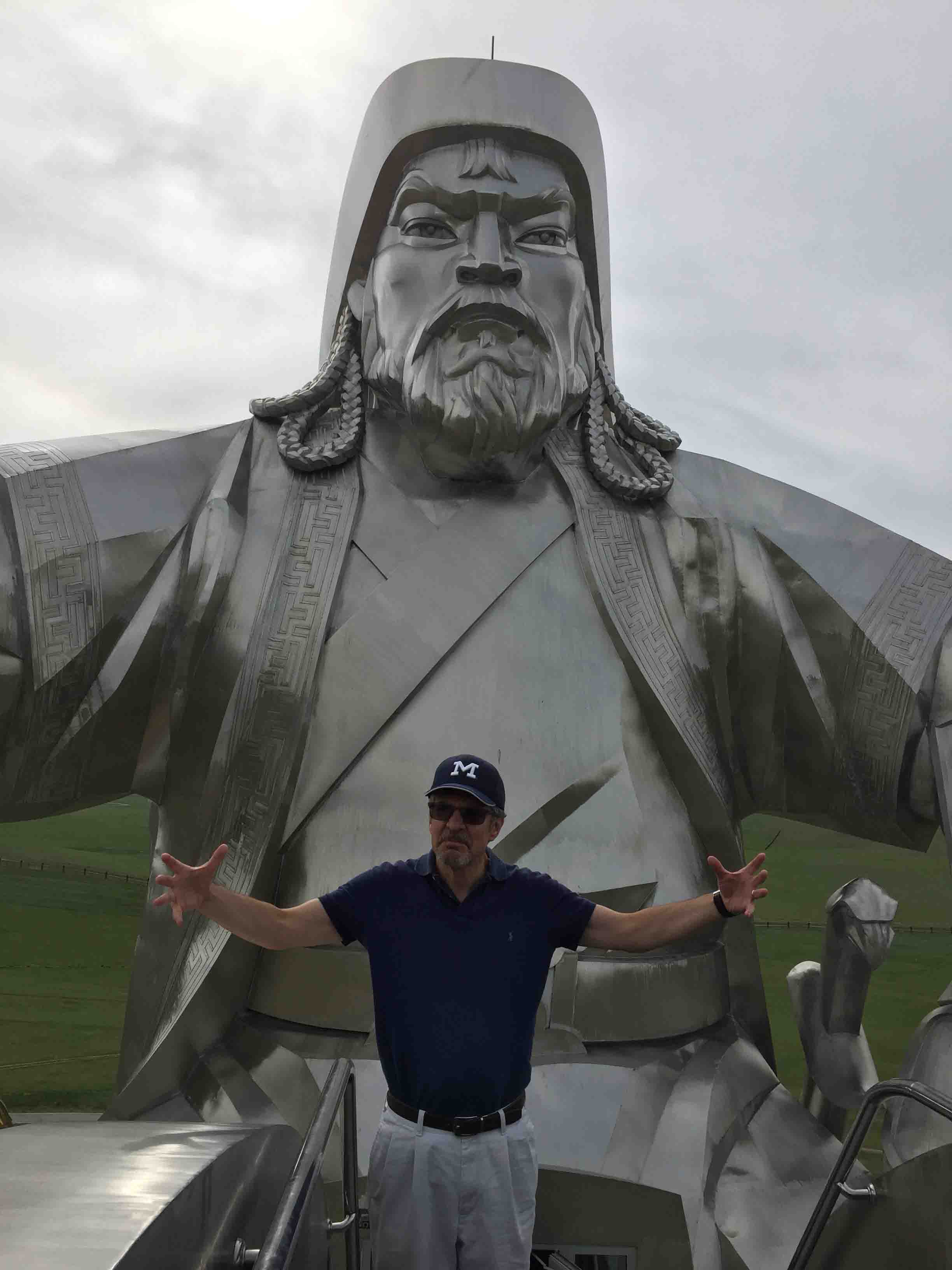
According to Skaff, why does modern Mongolian nationalism give too much credit to Chinggis Khan while ignoring the contributions of his son, Ögödei, and grandson, Mongke?
Capture of Jin capital, Zhongdu, 1215
Reorganization of tribes
Units of 10, 100, 1000, and 10,000 (tumen)
Turks: Cavalry
China, Russia, and Iran: infantry, siege weapons
Hessl, Amy, et al. “Tree Rings, Climate, and People in Central Asia,” 2013.
Extremely dry, 1175-1190
Extremely wet, 1211-1226
Compare with Hansen, p. 311
Khan of Khans |
Relationship to Chinggis/Predecessor | Reign |
| Chinggis Khan | 1206-1227 | |
| Ögödei | Son | 1229-41 |
| Güyük | Grandson/Nephew | 1246-48 |
| Mongke | Grandson/Cousin | 1251-1259 |
| Khubilai Khan | Grandson/Younger Brother | 1260-1294 |
Grandson of Genghis Khan
Brother of Mongke
Born North China
Defeated brother Arigh Böke in civil war
Empire divided into khanates
Founded Yuan dynasty, 1271
Conquered S. Song, 1279
Insufficient grasslands
Terrain unsuited to cavalry warfare
Waterways
Forests
Mountains
Chinese Infantry
Navy
Siege warfare
Xiangyang, 1267-1272
Middle Eastern counterweight trebuchet
Semu “People of Various Categories”
Middle Easterners and others (Marco Polo)
Crop exchanges
Long distance trade
Technological exchanges
Iran: Cobalt blue glaze + China: Porcelain=Chinese Blue-glazed Porcelain
Smithsonian Museums Freer Gallery of Art, Room 12: "The Peacock Room in Blue and White"
Gunpowder and firearms
China Gunpowder 6th c.
Fire arrows, 9th c.
Bombs 11th c.
Cannon 13th c.
Mongol Empire
Rapid spread of technology